Drip Irrigation Systems in Northern California
The most water-efficient way to keep your landscape healthy, reduce runoff, and meet local water restrictions. A complete guide for 2026.
In this guide
What Is Drip Irrigation?
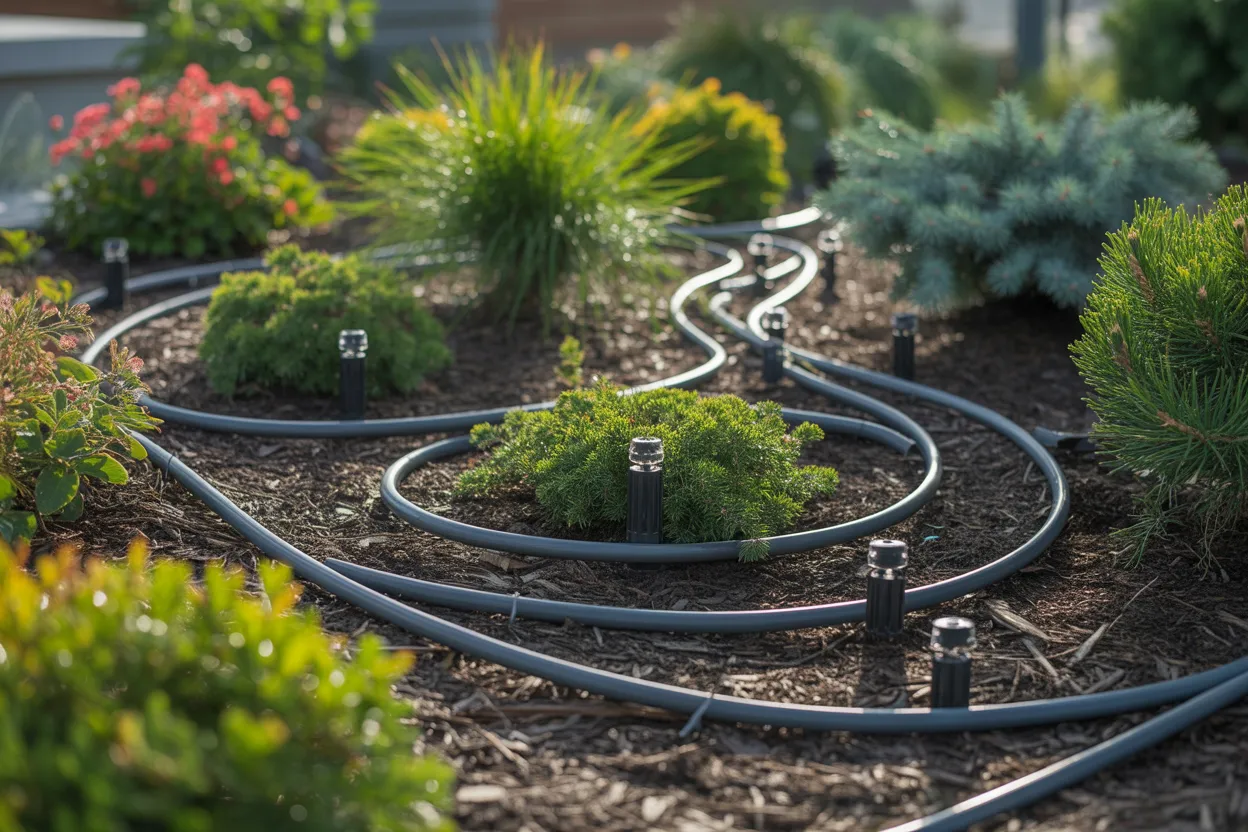
Drip irrigation is a low-pressure system that delivers water directly to the soil at the base of plants. It uses tubing, drip lines, emitters or inline drip holes, filters, and pressure regulators to release water slowly and efficiently. Water is applied at ground level, allowing it to soak deeply into the soil where plant roots need it most.
Why Drip Is a Perfect Fit in Northern California
Northern California has a Mediterranean climate: long dry seasons, increasing water restrictions, and high evaporation during summer. Drip irrigation directly addresses these challenges.
Where Drip Irrigation Works Best
Drip irrigation is ideal for a wide range of landscape areas, though it is not typically recommended for traditional turf lawns.
- Planting beds and borders
- Shrubs and hedges
- Trees, both new and established
- Native and drought-tolerant landscapes
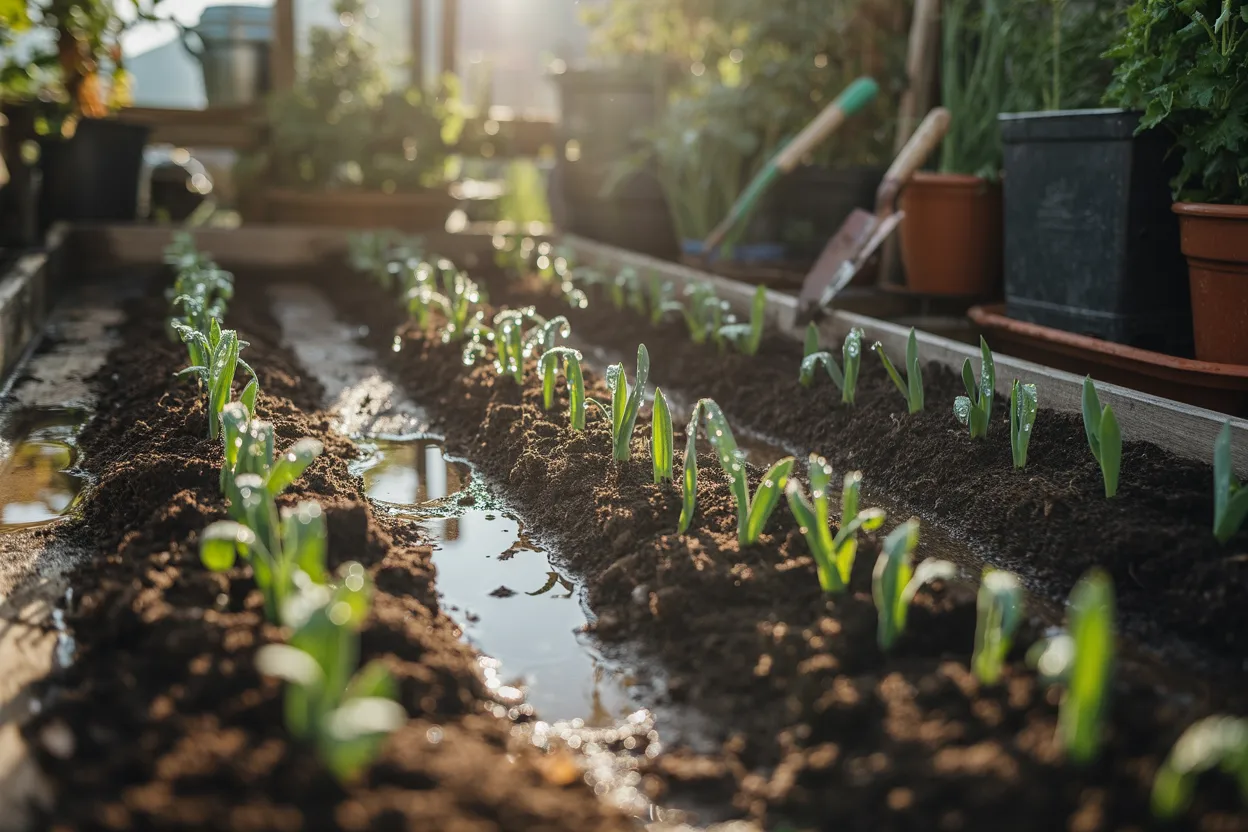
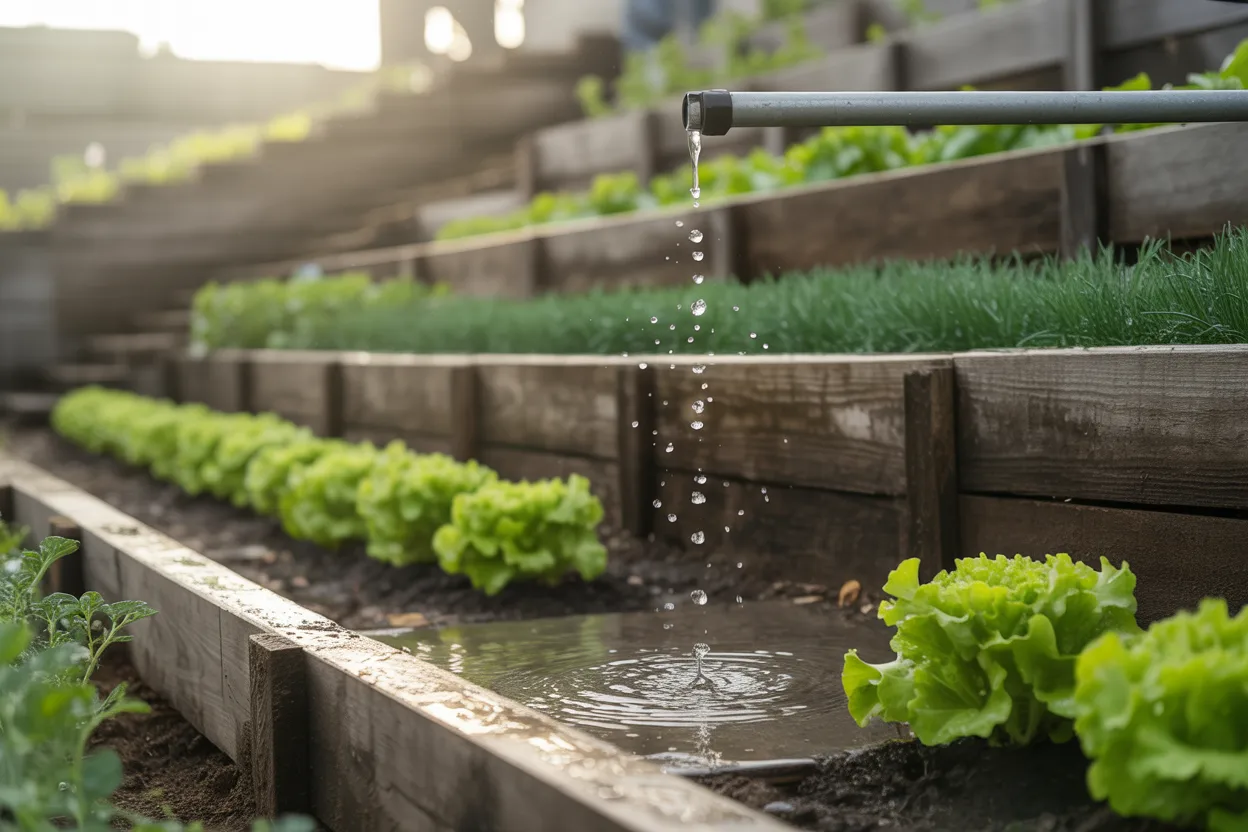
- Raised planters and vegetable gardens
- Sloped areas where runoff is a concern
How Drip Irrigation Saves Water
Traditional sprinklers spray water into the air, where much is lost to wind drift, evaporation, and overspray onto hardscape. Drip irrigation applies water only where plants are located, slowly and evenly.
Drip irrigation delivers water to the root zone, reducing waste by up to 50%. It prevents puddling, runoff, and weed growth between plants, making it one of the most efficient irrigation methods available.
Drip Irrigation and Plant Health
Healthier plants create more resilient landscapes. Drip irrigation supports plant health by maintaining consistent soil moisture, reducing stress from over- or underwatering, preventing fungal diseases caused by wet foliage, and encouraging deeper, stronger root systems. This is especially important for new plant installations, where proper watering determines long-term success.
What Makes Up a Drip Irrigation System
A properly designed drip system includes several key parts that work together to deliver water efficiently.
- Pressure regulator to protect tubing and emitters
- Filter to prevent clogging from sediment
- Drip tubing or inline drip line
- Emitters (if not inline)
- Automatic valves
- Smart irrigation controller (optional but highly recommended)
Smart Controllers and Drip Irrigation
When paired with a smart irrigation controller like Hunter or Rain Bird, drip systems become even more efficient. Smart controllers offer weather-based scheduling, seasonal watering adjustments, rain skip technology, and remote control via smartphone. This ensures plants receive exactly the amount of water they need, nothing more.
Smart controllers often pay for themselves in one season. By adjusting run times based on local weather data, they can cut water usage by an additional 20-40% compared to a standard timer.
Drip Irrigation and Fire-Wise Landscaping
Drip irrigation plays an important role in fire-safe landscaping. It keeps plants near structures green and hydrated, prevents dry fuel buildup, supports defensible space requirements, and reduces overspray near buildings. When designed and maintained correctly, drip irrigation supports both sustainability and wildfire preparedness.
Is Drip Irrigation Right for Your Property?
Drip irrigation is a great option if you want to reduce water use, have planting beds, shrubs, or trees, are transitioning away from turf, want a low-maintenance efficient system, or live in a water-restricted or fire-prone area.
We design and install custom drip irrigation systems tailored to your plant types, soil and slope, local water regulations, and long-term landscape health. Curious about pricing? See typical irrigation costs in our Sonoma County landscaping cost guide.
Serving Healdsburg, Windsor, Santa Rosa, Petaluma, Geyserville, Cloverdale, Sebastopol, and all of Sonoma County. California License #1113978 · 5-star rated on Google, Yelp, and Facebook.
Drip Irrigation Questions, Answered
What is drip irrigation?
Drip irrigation is a low-pressure system that delivers water directly to the soil at the base of plants through tubing, drip lines, emitters or inline drip holes, filters, and pressure regulators. Water soaks deeply into the root zone instead of spraying into the air.
How much water does drip irrigation save?
Drip irrigation can reduce water use by 20-50% compared with spray irrigation, because only the root zone receives water and there is little evaporation, wind drift, or overspray.
Is drip irrigation good for Northern California?
Yes. Northern California has a Mediterranean climate with long dry seasons, growing water restrictions, and high summer evaporation. Drip applies water slowly at ground level, which addresses all three.
Can I use drip irrigation on a lawn?
Drip irrigation is not typically recommended for traditional turf lawns. It works best for planting beds, shrubs, hedges, trees, native and drought-tolerant landscapes, raised planters, vegetable gardens, and slopes.
What parts does a drip irrigation system need?
A properly designed system includes a pressure regulator, a filter, drip tubing or inline drip line, emitters (if not inline), automatic valves, and ideally a smart irrigation controller.
Are smart controllers worth it with drip irrigation?
Smart controllers such as Hunter or Rain Bird offer weather-based scheduling, seasonal adjustments, rain skip, and smartphone control. They can cut water use a further 20-40% compared with a standard timer and often pay for themselves in one season.
Does drip irrigation help with fire safety?
Yes. It keeps plants near structures green and hydrated without overwatering, reduces dry fuel buildup, supports defensible space requirements, and limits overspray near buildings.
How much does drip irrigation cost, and do you offer free evaluations?
Cost depends on zones, system type, and site layout, so we price after an on-site look; see our irrigation price ranges in the Sonoma County landscaping cost guide. We offer a free irrigation evaluation across Healdsburg, Windsor, Santa Rosa, Petaluma, Geyserville, Cloverdale, Sebastopol, and all of Sonoma County.
Ready to Upgrade Your Irrigation System?
We design and install custom drip irrigation systems tailored to your property. Contact us to schedule an evaluation or request a quote, or call 707-620-0968.
Water-saving figures are typical ranges and vary by site, plants, and existing system.